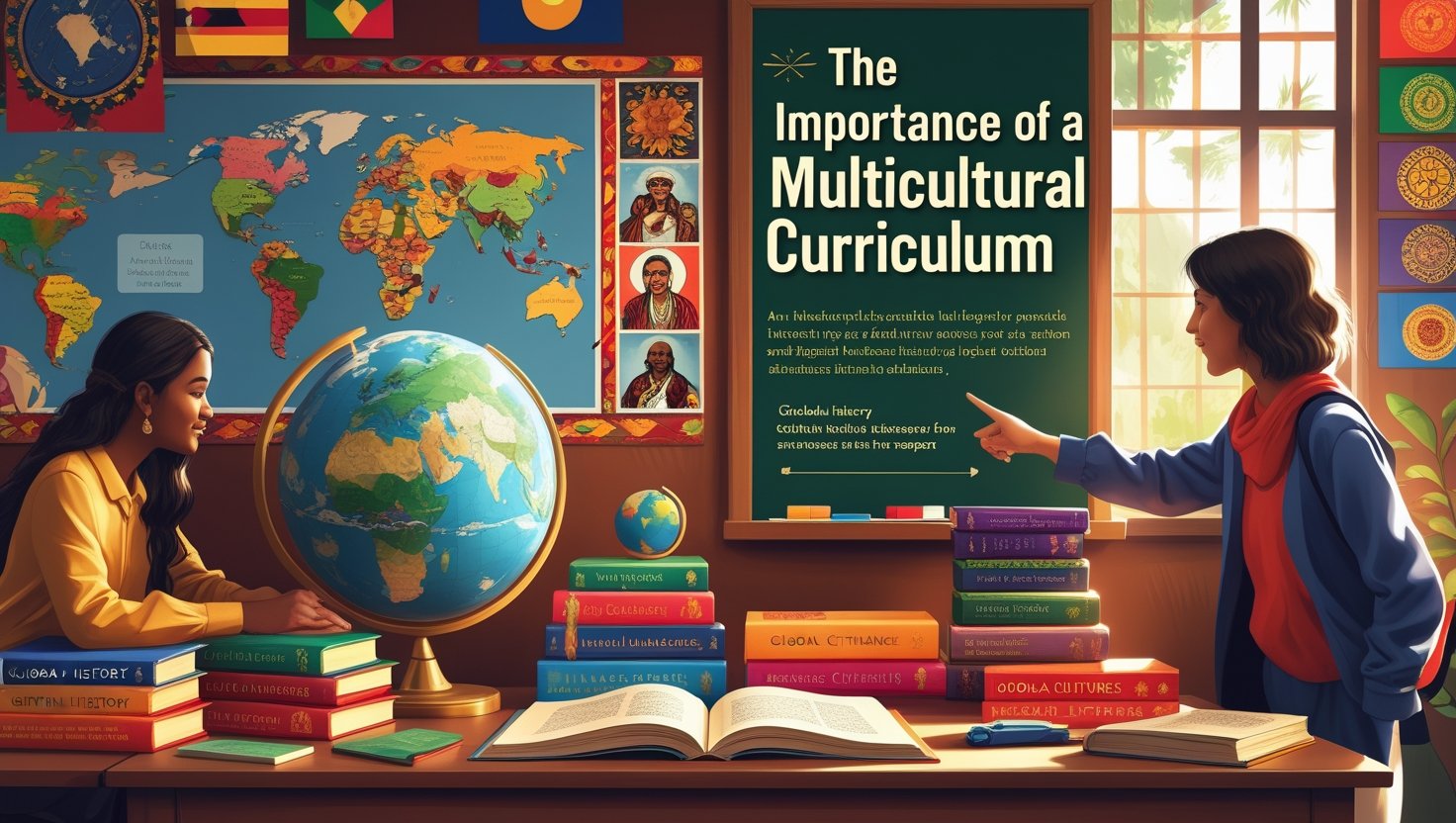
In today’s global and interconnected era, it is not enough for education to be limited to just books and theory. In every classroom, students belong to different backgrounds, cultures, and beliefs. In such a situation, it has become very important to prepare a multicultural curriculum in which every culture is respected, understood, and represented. This curriculum is not just a teaching method but an approach that teaches students tolerance, acceptance, and the importance of diversity. When students learn about other cultures, understand their values and traditions, their perspective becomes positive. They not only remain lost in their thoughts but also start appreciating different people of the world.
The aim of a multicultural curriculum is not just to impart knowledge but also to develop empathy, respect and cultural intelligence in students. This approach prepares them better for the real world where they have to work with people of all kinds. Such a curriculum makes schools inclusive where every student feels equal, regardless of his race, language or religion.
In this blog we will explore why this curriculum is important, what effect it has on students, how stereotypes are removed, and what role teachers play in it. Finally, we will see how it can form the foundation of a peaceful and respectful society.
Promoting Cultural Awareness – Giving Global Thinking to Students:
The biggest advantage of a multicultural curriculum is that it creates cultural awareness in students. When a student is confined only to his own culture, his thinking is also limited. But when he reads about people from different backgrounds in the classroom, his perspective broadens. He does not think only about his region or country, but also can understand people on a global level. This curriculum makes students understand that the world does not run on just one set of values; rather, every culture has its own respect, traditions, and values which need to be understood and appreciated.
When students learn about other languages, art forms, history, and traditions, they develop tolerance. They learn to respect everyone’s thinking and way of living. This awareness not only makes students more mature, but they also become more prepared for the real world, where they have to work with people from every culture. Discussion is healthy in such classrooms, where every student expresses their point of view freely. Such an environment increases both confidence and respect in students and leads them towards global citizenship.
Breaking Bias and Stereotypes – Ways to Think Inclusively:
Another very important aspect of a multicultural curriculum is that it breaks deep biases and stereotypes in the minds of students. We all come from society with some preconceived ideas, like people of a certain race or culture are like this, or people speaking a certain language are not intelligent. This thinking is often unconscious but these prejudices can make the classroom environment negative. When different cultures get equal representation in the curriculum, the perspective of students changes.
When a student reads about a hero or scientist from African or Hispanic culture, he starts to understand that intelligence, bravery or creativity are not limited to any one culture. This thinking gradually eliminates the bias from within him. In this process, the role of the teacher is also very important. He ensures that every perspective gets space in the class and every student feels proud of his or her background.
When students understand the backgrounds of their classmates, they do not judge them only based on colour or accent. Such inclusive thinking helps them throughout their life – be it job or social life. Multicultural curriculum produces not only knowledge but also humanity in students which is very important in today’s world. This curriculum makes them understand the real meaning of equality and fairness.
Improvement in Academic Performance – Equal Opportunity for Every Student:
When students receive lessons and content that are relevant to their culture, they feel more motivated. If a student finds only one race or background mentioned in a book, he feel alienated. But if his culture, language or traditions are also included in the lessons, he feels valued and accepted. This feeling positively affects his academic performance.
Multicultural curriculum takes into account the needs and learning styles of students. Not every student learns the same way. Some people like visual learning, while others understand storytelling. When the curriculum is diverse, every student has an opportunity to learn in his or her way. This leads to more students participating actively and their grades improving.
Research has also shown that schools that implement an inclusive curriculum have higher overall performance and engagement levels of students. When students feel that their background is also a part of education, they are more involved not only in studies but also in school activities. In such an environment, the chance of bullying and isolation also decreases. Every student gets an equal opportunity to showcase their abilities and achieve success.
Role of Teachers – Importance of Multicultural Teaching:
A successful multicultural curriculum can be implemented only when teachers understand this ideology and implement it. The role of teachers is not just to cover the syllabus, but they also have to contribute in creating a positive, inclusive and respectful environment in the class. When a teacher respects the culture and background of every student, the students also adopt the same approach.
Teachers should choose teaching materials that represent every background. If there are only western perspectives in history lessons, then students start considering other cultures inferior. But when the heroes, scientists and leaders of Africa, Asia, Middle East and Latin America are mentioned, everyone feels a sense of barbarism. It is the teacher’s responsibility to make discussions open and respectful where every student can speak his/her mind.
At the same time, teachers also have to recognize their unconscious biases. They should receive training on how they can design inclusive activities and assignments. When a teacher makes the classroom a safe and inclusive space, students feel more confident and perform better. Multicultural teaching opens a new path not just for students but for the entire society – where there is understanding and respect among all.
Conclusion:
Ultimately, the biggest benefit of a multicultural curriculum is that it improves not just education but society as a whole. When students learn to appreciate diversity from a young age, they grow up to be tolerant and open-minded individuals. Such people, regardless of their race, religion or background, have the right to live peacefully with each other.
A multicultural curriculum not only promotes equality in schools, it also brings collaboration and understanding to the future workforce. When every student feels that his identity, culture and language are being valued, he develops self-respect and confidence. Because of this, he explores his potential fully and also gives some positive return to the society.
This curriculum is not just for minorities but for every student. Everyone gets an opportunity to understand others. With the help of this approach, we can prepare such a generation that is free from prejudices and believes in fairness and justice. Only this kind of education can really unite the society. Multicultural curriculum is an important step towards a better, inclusive and peaceful world where everyone gets equal respect and opportunity.
FAQs:
- What is a multicultural curriculum and why is it important?
A multicultural curriculum is an educational approach that includes and respects different cultures, backgrounds, and beliefs within the classroom. It promotes tolerance, acceptance, and cultural awareness, preparing students to work and live in a diverse, interconnected world. - How does a multicultural curriculum help students develop cultural awareness?
By teaching students about different languages, traditions, history, and values from around the world, the curriculum broadens their perspectives. It encourages respect and understanding for all cultures, fostering global thinking and helping students become confident, respectful global citizens. - In what ways does a multicultural curriculum break down biases and stereotypes?
This curriculum presents equal representation of various cultures, helping students realize that qualities like intelligence and bravery are universal and not limited to any one group. It challenges unconscious prejudices and promotes inclusive thinking by highlighting achievements from diverse backgrounds. - How does a multicultural curriculum impact students’ academic performance?
When students see their culture reflected in lessons, they feel valued and motivated, which boosts their engagement and performance. The curriculum accommodates different learning styles, leading to higher participation and lower instances of bullying or isolation in schools. - What role do teachers play in implementing a multicultural curriculum effectively?
Teachers create a positive, inclusive environment by respecting all cultures, choosing diverse teaching materials, encouraging open discussions, and recognizing their own biases. Their approach helps students feel safe, confident, and respected, which improves learning outcomes and promotes social harmony.
About the Author
